Sustainable materials: which examples to avoid when renovating
Hello, it’s Quentin. For a more sustainable renovation, avoid materials that are hard to recycle, highly emitting, or laden with harmful substances, unless their use is technically justified.
Price and appearance are not enough to assess a product’s impact. Also look at its composition, its lifespan, its origin and how it can be reused or recycled.
The right habits to adopt
- Check the composition and the emissions indicated on the technical data sheets.
- Prioritize recycled, renewable or easily reusable materials.
- Ask for certification proof for woods and wood-treatment products.
- Compare lifespan and maintenance, not just the purchase price.
- Have the necessary quantity quantified to avoid surplus and waste.
To compare insulation solutions, also consult this guide on the materials that insulate without traps and these references for avoiding facade durability.
Materials to avoid in renovations: spotting the main traps
A material is not automatically bad in all uses. The real risk is choosing it without examining its composition, emissions, origin and end of life.
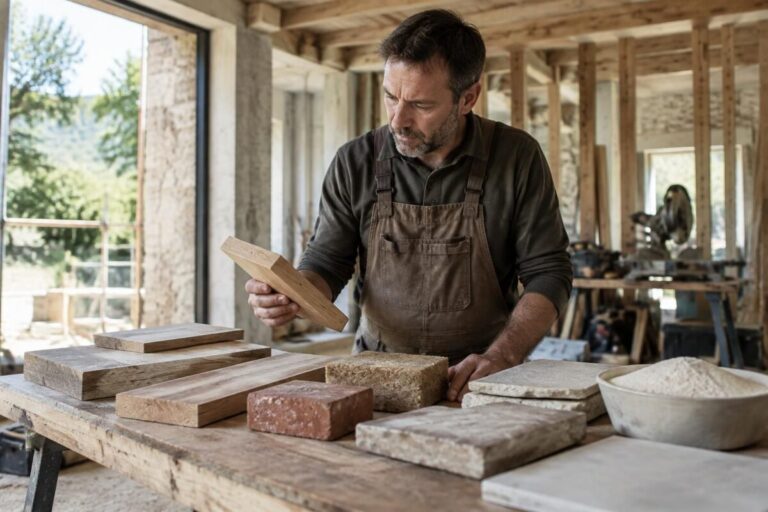
In a renovated house, some products can also complicate indoor air quality or make waste sorting more difficult. The example of Nora, who is renovating a small house, shows why it’s better to compare the technical data sheets before signing a quote.
| Material to examine | Why to be cautious | Option to compare |
|---|---|---|
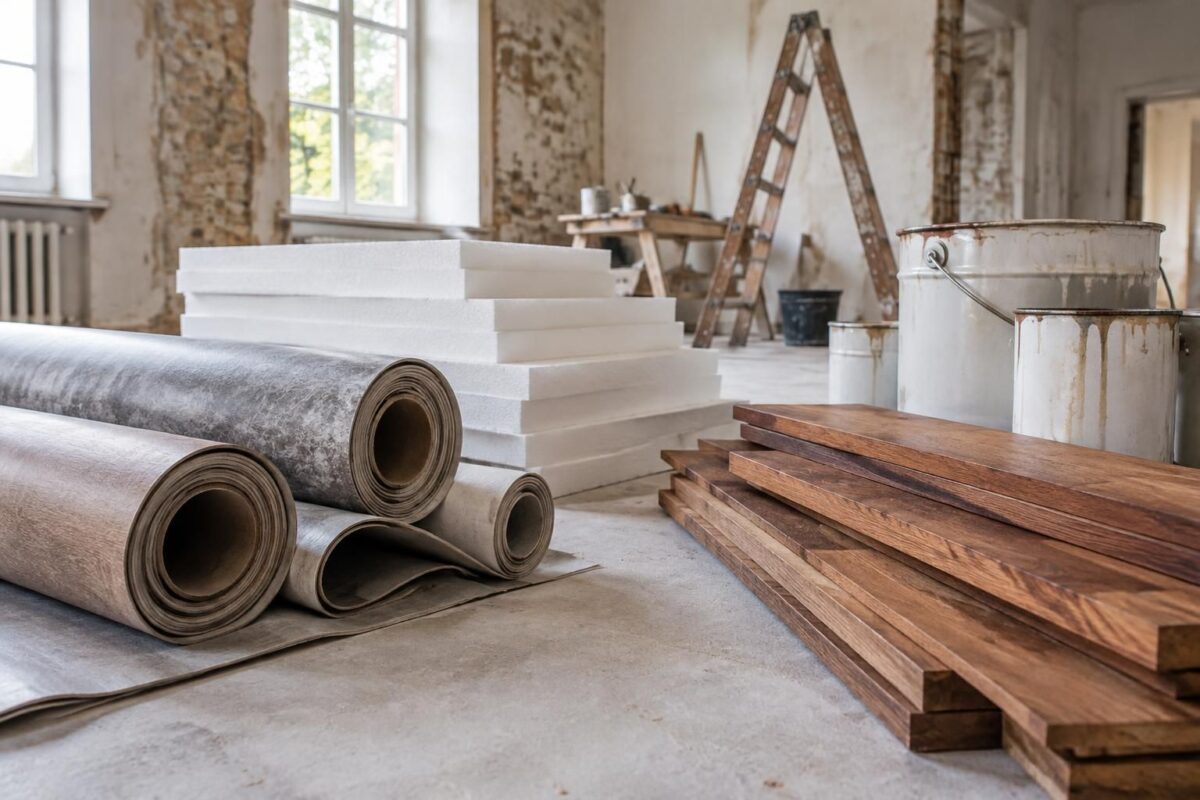
| Unrecycled PVC and vinyl flooring | Their recycling depends on their composition and the local recycling streams available. | Natural linoleum, repurposed parquet, or durable tiling depending on the room. |
| Alkyd paints | These paints can emit volatile organic compounds during application and drying. | Water-based paint with reduced emissions, suitable for the substrate. |
| Uncertified exotic wood | Origin and exploitation conditions are difficult to verify without traceability. | Certified local wood or reclaimed wood. |
| Polystyrene insulations and fossil-based synthetic insulations | They come from fossil resources and their end of life should be anticipated. | Cellulose insulation, wood fiber or cork, depending on humidity and building constraints. |
| Materials containing formaldehyde | Some panels and glues can contribute to emissions in indoor air. | Low-emission panels, with a clearly documented emissions sheet. |
| Very carbon-intensive concrete | Its production can weigh heavily on the carbon balance, especially for large volumes. | Reduce quantities or study low-impact formulations when the structure allows. |
| Toxic treatment products | They can present risks during application and disposal. | Targeted treatment, less hazardous product, or preventive solution suited to the material. |
To remember: non-recyclable materials aren’t all to be banished outright, but their lifespan, maintenance and end-of-life must be considered in the decision. A robust product that is well installed can sometimes prevent frequent replacements.
Paints, glues and panels: protecting indoor air quality
Nora plans to use an alkyd paint in a poorly ventilated room, because she believes it is more durable. Before choosing, she compares the intended uses, the indicated emissions, and the ventilation guidelines.
The same approach applies to panels and glues: check the information on formaldehyde and favor products whose emissions are clearly documented. A good ventilation during and after the work remains essential.
Wood, insulations and floors: comparing the impact across the life cycle
Uncertified exotic wood may seem appealing for its color, but without traceability its origin remains uncertain. Certified local wood or reclaimed wood can offer a relevant solution, provided it is suited to the humidity and the use of the room.
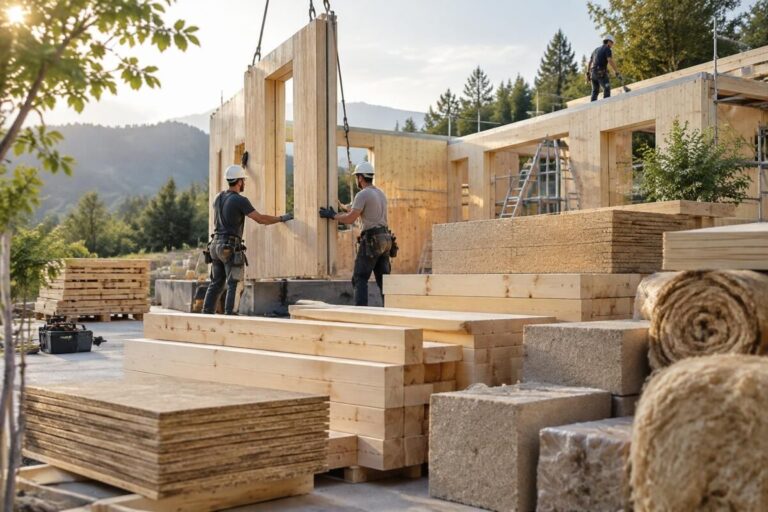
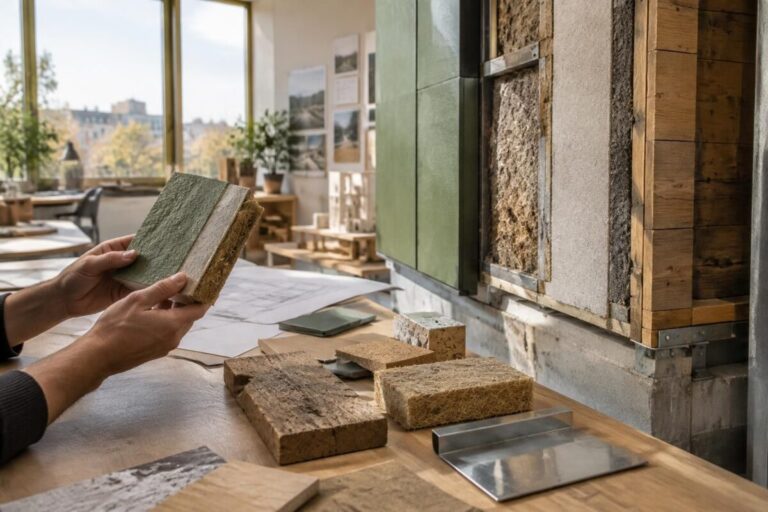
For insulation, do not automatically replace a polystyrene insulation with a bio-based material without checking the building. Humidity, available thickness and expected performance also matter: the choice should avoid problems as much as reducing environmental impact.
Choosing durable materials in three steps
- Define the project constraints. Note the room’s use, humidity exposure, safety requirements and the desired lifespan.
- Compare the documents. Request the technical data sheets, information on emissions, provenance and possibilities for reuse or recycling.
- Validate installation and end of life. Confirm with the craftsman that the product is suitable for the surface and find out about sorting off-cuts and waste.
This method helps avoid a common mistake: choosing a material marketed as “green” without verifying whether it actually suits the project. The best choice is the one that lasts, stays healthy in use, and limits waste.
Practical questions about materials to avoid
Should all polystyrene insulation be avoided?
No. Their relevance depends on the project, the performance sought, humidity constraints, and available end-of-life solutions. Compare several options before deciding.
How to identify a responsible exotic wood?
Ask for proof of traceability and a recognized certification. If the origin is not clearly documented, compare with certified local wood or reclaimed wood.
Are water-based paints always risk-free?
Not necessarily. Check the label and emissions information, follow the application instructions and ventilate the rooms properly.
What to do with materials disposed of during the renovation?
Separate waste by category and check the guidelines of the disposal site or local recycling stream. Some clean, good-condition elements can also be reused.
Thanks for stopping by! See you soon for a new article. — Quentin