
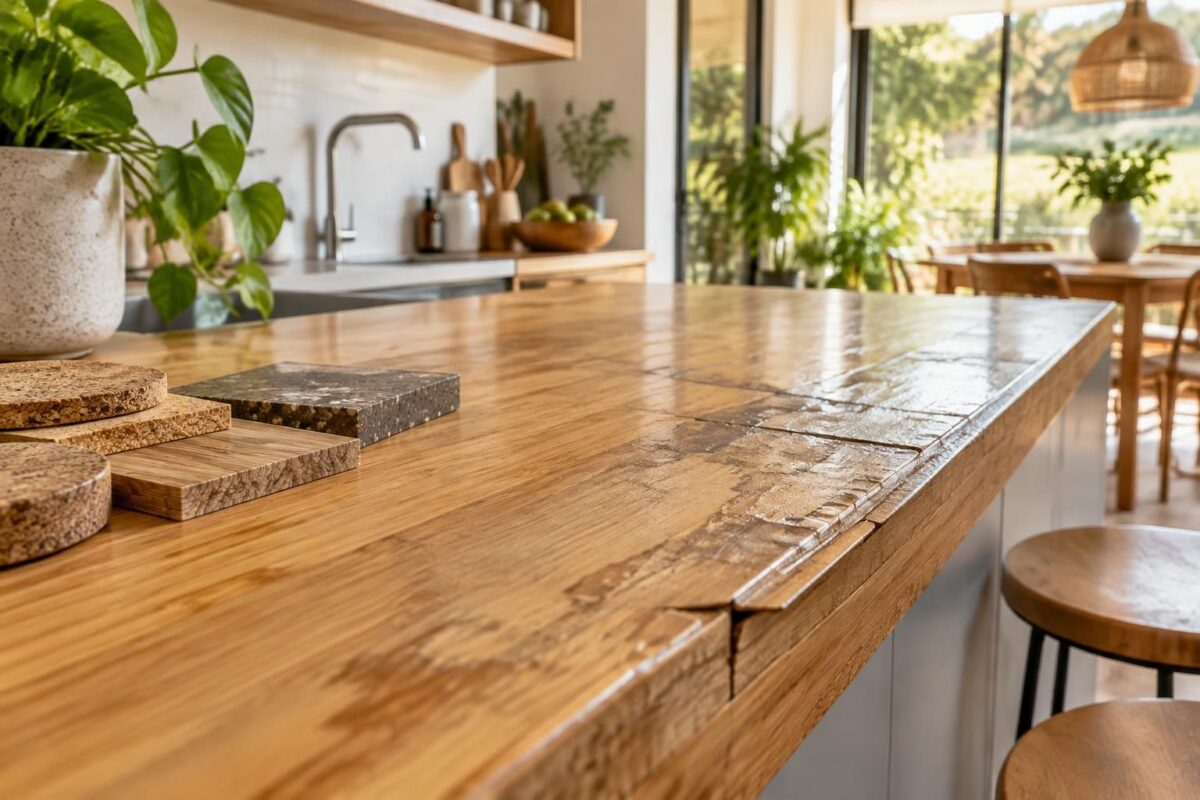
Sustainable materials: this choice looks green but quickly disappoints
Hi, it’s Quentin. To prevent a green material from disappointing quickly, check its impact across its entire life cycle, its resistance to the local climate, and its real service life. A label or a natural-looking appearance isn’t enough: installation, maintenance and end of life also count. With a few concrete checks, you can reduce repairs and choose a healthier and more durable solution.
Take action now:
- Compare the carbon footprint and the resources mobilized, from production to end of life.
- Check the quality of materials thanks to the technical data sheets and the appropriate certifications.
- Choose a material compatible with humidity, sun and temperature variations in your region.
- Ask whether it can be repaired, reused or recycled after use.
- Take into account installation and maintenance costs, not just the displayed price.
To compare the criteria of durability, carbon and reuse, consult this guide on the durable materials and their life cycle. You can also explore benchmarks for choosing truly durable materials before requesting quotes.
Why a material that looks green can disappoint
A product may seem ecological and yet be ill-suited for the building. If it doesn’t withstand rain, humidity, or temperature fluctuations, it will need to be replaced sooner. This obsolescence accelerates costs and can cancel part of the environmental benefit.
Greenwashing also makes the choice more difficult: a label “natural” or “eco-responsible” doesn’t necessarily describe its production, transport, or end-of-life processing. For real responsible consumption, request verifiable data and consider the material in its precise use.
The right material depends on usage and installation
Hemp, cork, or rammed earth can be suitable for certain projects, but their performance depends on the construction system and implementation. A poorly installed insulation can lose part of its effectiveness, even if it’s bio-based.
If you renovate a damp room, opt for a solution suited to humidity and check ventilation. If you’re creating a dry space, compare thermal comfort, durability, and repair possibilities.
An anecdote sums up the trap: in a fictional project, a team chose a cheap coating marketed as ecological, without checking its water resistance. A few seasons later, they have to replace it and dispose of avoidable waste.
Compare durable materials without judging by appearances
Certified wood, recycled steel, or low-emission concrete can be relevant depending on the project. No material is automatically the best: you must compare its local availability, its service life, its maintenance and its recyclability.
| Material | Possible advantage | Aspect to check |
|---|---|---|
| Certified wood | Renewable and repairable resource | Origin, protection against moisture and required maintenance |
| Recycled steel | Good strength and potential for reuse | Transportation distance and available recovery/recycling stream |
| Low-emission concrete | Can reduce impact compared to a conventional formula | Composition, technical performance and environmental declaration |
| Cork or hemp | Plant-based insulating solutions | Compatibility with the wall, ventilation and installation rules |
| Reuse materials | Sometimes avoids manufacturing new products | Condition, traceability and conformity to the intended use |
A concrete incorporating secondary materials can reduce certain emissions, but the result varies depending on its formulation and transport. Read the product data rather than taking a general percentage: the environmental impact is judged in the context of the construction site.
A simple three-step method
- Step 1 : Identify the real needs: structure, insulation, finishing or façade. Note site constraints and the expected service life.
- Step 2 : Compare the technical data sheets, certifications and life-cycle information. Also check maintenance, reparability and end of life.
- Step 3 : Ask the craftsman to confirm the material’s compatibility and the installation method. Plan for realistic maintenance before approving the quote.
An architect sums up the issue well: “Durability isn’t read only on the label; it’s verified in use.” In other words, a material that is suitable and well installed is often worth more than an attractive but poorly chosen product.
Plan for the real cost and avoid surprises
The upfront price tells only part of the story. A more expensive material at the start can be worthwhile if it lasts longer and requires little maintenance, but this saving depends on the project and the installation cost. Compare several scenarios over time, depending on the model and the situation.
For a house, focus especially on comfort, potential energy savings and ease of repair. For a commercial space, durability and maintenance may weigh more in the budget.
Bio-based materials are not always the ideal answer. You should also look at their processing, the necessary treatments and their behavior in the building: the “natural” label does not replace a full analysis.
Common mistakes to avoid
- Choose based solely on the initial price or appearance.
- Ignore the local climate and the building’s exposure.
- Confuse an ecological claim with verifiable evidence.
- Overlook installation, maintenance or reuse possibilities.
- Replace a material in good condition without evaluating whether it can be repaired.
The best decision is often the one that avoids premature replacements and reduces energy needs without compromising the health of the dwelling. This is where eco-design becomes concrete: thinking together about the product choice, its installation and its end of life.
How to recognize a genuinely durable material?
Examine its service life, its impact across the entire life cycle, its resistance to the local climate, its maintenance and its options for reuse or recycling. Check the documentation rather than relying on a simple ecological label.
Does a durable material cost more?
Not necessarily. The price varies by product and project. Compare the purchase cost, installation, maintenance and possible replacements over time, depending on the situation.
Are bio-based materials suitable for all dwellings?
They can be suitable for many projects, but their effectiveness depends on design, climate, humidity and the quality of installation. Seek a technical opinion to verify their compatibility.
Why doesn’t recyclability alone guarantee durability?
A recyclable material can still be not very durable or poorly suited to its use. Its service life, manufacturing impact, transport and the availability of a recycling stream also matter.
Thanks for your interest. Best regards, Quentin


