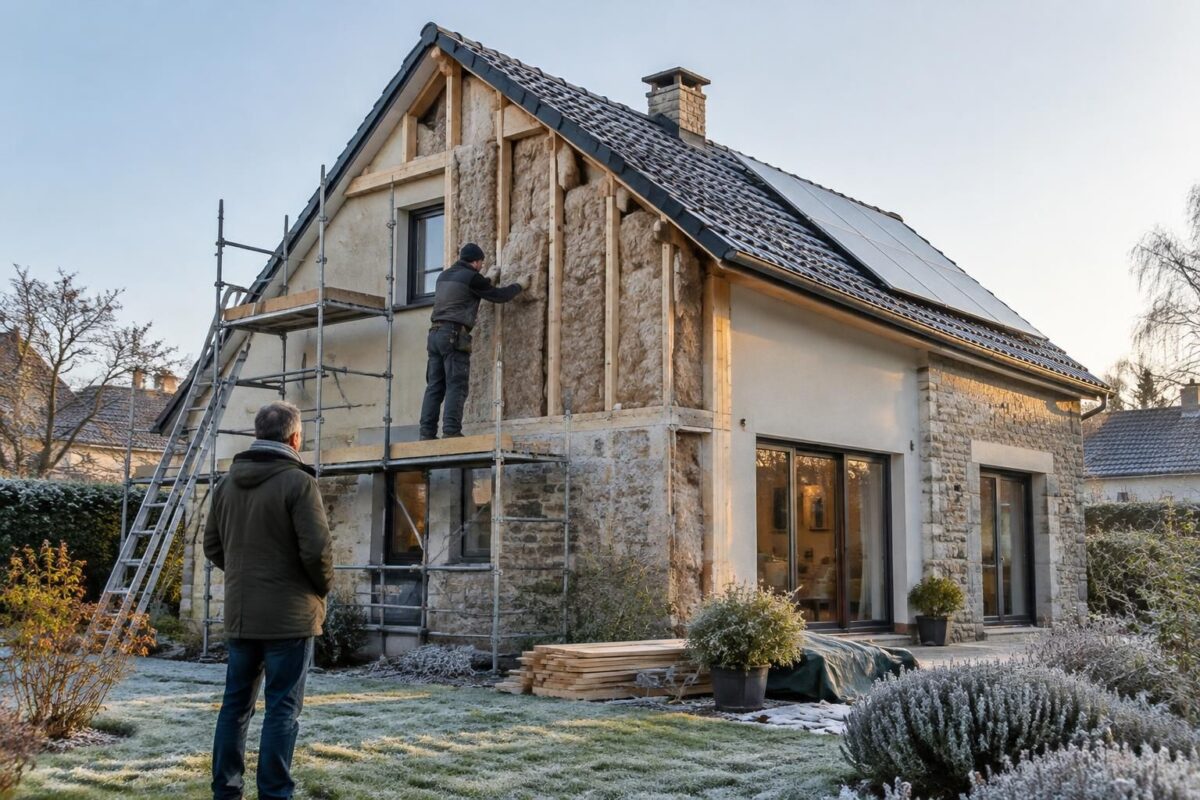
Green energy: should you insulate first before buying
Hello, this is Quentin. In most projects, it’s better to insulate before buying solar panels. You first reduce your home’s needs, then you size a system adapted to its actual consumption.
The roof can represent a significant portion of heat losses in a poorly insulated house. But the electricity produced by the panels does not escape directly into the attic: it only offsets these losses if it powers an electric heating device.
The right order depends on the roof’s condition, the insulation, and your plans, such as installing a heat pump. A diagnostic allows you to prioritize work without blind investing.
Things to do now
- Check the roof condition : identify leaks, damaged tiles, and signs of aging.
- Consult your energy performance diagnosis and gather your invoices to understand the main areas of consumption.
- Have the thermal insulation evaluated in the attic, but also in the walls and floors if necessary.
- Request a solar sizing study based on your needs after the work, not only on your current consumption.
- Check the subsidies and eligibility conditions with official sources or an energy renovation advisor before signing a quote.
To understand why the order of works affects the budget, check out this guide on insulation before solar purchase and these tips for organizing the steps of an energy renovation.
Insulation and solar panels: why the order of works matters
In a poorly insulated dwelling, a significant portion of heat can escape through the roof. Estimates vary by building, but losses of about 25 to 35% are sometimes observed in older, less efficient houses.
Insulating reduces heating needs and improves comfort. Renewable energies then become more useful to cover a controlled consumption: it’s a simple principle of the energy transition, Avoid waste before producing more.
Solar does not replace an insulated roof
Solar panels produce electricity, not heat. If heating runs on electricity, a solar installation can contribute to powering it, but it does not eliminate the building’s losses.
In other words, producing more does not fix faulty insulation. A better insulated house can also allow revisiting the required solar power and, if a heat pump is considered, dimensioning it according to reduced heating needs.
Internal or external insulation: which option to choose?
Internal insulation is often easier to consider when the roof covering is in good condition. It can however reduce the usable space under the rafters and requires particular attention to ventilation and airtightness.
External insulation, often called sarking for pitched roofs, usually occurs during a roof refurbishment. It preserves more interior space and facilitates coordination with the installation of panels, but its cost and feasibility depend on the timber frame and the building.
| Situation | Often relevant order | Points to check |
|---|---|---|
| Old or damaged roof | Repair or replace the roof, insulate, then study solar | Watertightness and condition of the timber frame |
| Healthy roof, accessible attic | Assess the insulation, then size the solar installation | Ventilation and continuity of the insulation |
| Home already well insulated | Directly study solar production | Consumption, orientation and shading |
In the case of a property purchase, don’t rely solely on the roof’s appearance. The energy performance diagnosis provides a first reference, but a technical visit can specify the works to be planned and their order.
A concrete example for sizing after insulation
Imagine a house where the attic is poorly insulated and where heating uses a lot. After effective works, needs can drop significantly, but the amount of the drop depends on the initial condition, the climate and the household’s habits.
An solar installation calculated before the works could therefore be oversized compared to future needs. Conversely, an energy audit and a self-consumption simulation help to choose a coherent power, without promising the same yield for all homes.
The three-step process
- Make an inventory. Have the roof, insulation, ventilation and energy use examined. If you plan a heat pump, include it in this consideration.
- Carry out the priority works. First address airtightness issues, then improve insulation according to the dwelling’s constraints. Take the opportunity of a roof renovation to study coordination with solar.
- Size and control the production. Get comparable quotes, check local rules, and study daytime usage. Controlling the devices can increase self-consumption without necessarily adding a battery.
Subsidies, VAT rates and financing conditions can evolve and vary depending on the works, income and dwelling. Check the current rules before building your budget, rather than counting on an announced amount from the start.
Should you always insulate before installing solar panels?
No. If the roof is sound and the dwelling is already properly insulated, the solar installation can be studied directly. An assessment helps determine the appropriate order.
Do solar panels cause heat loss through the roof?
No. Solar panels generate electricity; heat losses come from a poorly insulated envelope. A photovoltaic installation does not replace thermal insulation.
Can you insulate and install panels during the same project?
Sometimes it’s possible, especially during a complete roof renovation. You need to coordinate the contractors and check the compatibility of the works, the condition of the timber frame and the guarantees.
Does insulation reduce the solar power required?
It can reduce the building’s energy needs and modify the relevant sizing. The power to install also depends on electrical usage, orientation, shading and the self-consumption aimed for.
I hope these tips have been helpful. See you soon! — Quentin