Durable materials : which materials last without a crazy extra cost
Hello, this is Quentin. The best value for money often comes from well-protected certified wood, reclaimed materials and mineral materials chosen for the right use. The most expensive material isn’t always the one that will last the longest in your home. Installation, maintenance and exposure to humidity matter just as much.
Do It Now
- Compare the cost over the long term : purchase, installation, maintenance and possible replacement.
- Check the intended use : a moisture-resistant material isn’t necessarily needed in a dry room.
- Ask for origin and guarantees for certified wood, recycled metals and reclaimed materials.
- Have the installation cost estimated : a complex implementation can negate the savings made at purchase.
- Reserve premium materials for high-traffic areas or spots that are difficult to replace.
To avoid appealing yet costly long-term choices, also consult this piece on the false good deals in sustainable materials and this guide devoted to budget-friendly options.
Compare Durable Materials by Use
A cost-effective material is not only cheap to buy. It must fit the room, last without excessive maintenance, and remain easy to repair or replace.
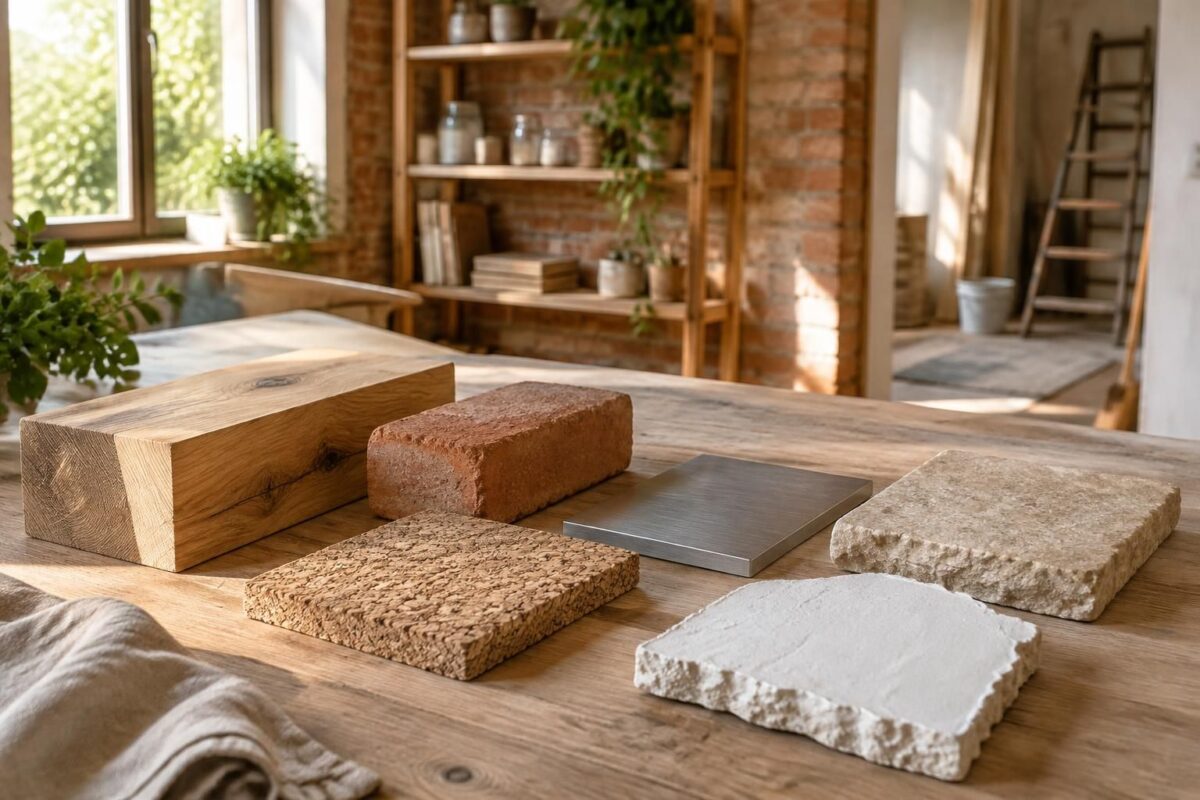
Certified wood and bamboo can be suitable for coverings and some interior fittings. Cork provides natural insulation, while clay brick and natural stone are valued for their sturdiness. Their weight and installation cost must, however, be included in the calculation.
| Material | Suitable uses | Cost-control point to verify |
|---|---|---|
| Certified wood | Flooring, siding, joinery | Choose a species suited to exposure and plan the necessary finish. |
| Bamboo | Interior cladding or furniture | Compare quality, origin and moisture resistance. |
| Cork | Insulation and interior cladding | Check thickness and compatibility with the substrate. |
| Recycled steel | Structure, reinforcements, fasteners | Have the technical needs and installation cost confirmed. |
| Recycled aluminum | Joinery and lightweight elements | Compare performance, finishes and reparability. |
| Clay brick and natural stone | Walls, floors and veneers | Consider transport, weight and installation. |
| Low-carbon concrete | Slab and structural work | Compare locally available solutions and the required sizing. |
Cost-effective durability thus depends on the right material in the right place. A heavy stone can be very durable, but unnecessary for simple interior cladding; conversely, a well-chosen insulation material can reduce energy costs for years.
Recovered Materials: Savings Depend on Condition
Recovered materials can reduce the budget, especially for doors, bricks or decorative elements. Before purchase, check their condition, dimensions and the possible presence of treatments or hidden defects.
For example, Nora is renovating a small entry: she reuses tiles in good condition for the floor, then reserves her budget for careful installation and for suitable insulation. She thus avoids paying for a new costly finish without sacrificing longevity.
Compare the real cost rather than the displayed price
A cheaper material may require regular protection or be difficult to repair. Conversely, a more expensive option at purchase can prove worthwhile if it lasts longer and requires little maintenance.
Recycled metals, such as recycled steel and recycled aluminum, are useful in suitable applications, but their price also depends on processing and installation. For a renovation, obtain several quotes with the same scope: same area, same finishes and same guarantees. Comparing identical offers reveals the possible savings.
A Simple Three-Step Procedure
- Define the main constraint : humidity, frequent traffic, insulation, weight or ease of maintenance.
- Compare two or three solutions by adding up purchase, installation and expected maintenance, then check their availability near you.
- Choose a sample or a small test area when possible, and request maintenance instructions before starting the works.
This method avoids paying for a performance you don’t need. It also helps to identify the areas where investing more actually improves comfort and durability.
Practical Questions About Durable Materials
Which durable material costs the least?
There is no universal answer: price depends on use, local availability and installation. Recovered materials can reduce the expense if their condition and dimensions suit the project.
Is certified wood always more expensive?
Not necessarily. Compare the species, finishes and maintenance costs. A wood suited to its exposure can avoid premature repairs.
Does bamboo suit all rooms?
No. Check the manufacturer’s recommendations and avoid choosing it without caution in a very humid area. Product quality and installation influence its performance over time.
How to estimate durability at a controlled cost?
Add together the purchase price, installation, maintenance and potential replacement, then compare materials suited to the same use. Also ask for warranties and the maintenance instructions.
I hope these tips have been helpful. See you soon! — Quentin