Building autonomy: should you get help or start on your own
Hello, it’s Quentin.
To gain autonomy in your building, start alone on simple tasks and get guidance as soon as a technical or safety issue arises.
Autonomous renovation does not mean doing everything without help. The right balance depends on your renovation skills, the time available, and the complexity of the work.
You can keep control of the project while entrusting the sensitive steps to professionals. Here’s how to choose without taking unnecessary risks.
The right habits to adopt
- List the tasks and separate finishing tasks from technical interventions.
- Assess your real level based on your experiences, not just your motivation.
- Ask for qualified advice before touching the structure, the electricity or the waterproofing.
- Plan for a margin for contingencies in your renovation budget, often around 15 to 20 %.
- Organize safety for the works: appropriate equipment, a clear worksite and someone informed if you are intervening alone.
To clarify your starting point, consult this guide on the useful threshold for starting autonomously and this reflection on the choice between starting alone and getting help.
Start alone or choose professional support?
If the works are simple, proceed at your own pace
Painting, installing shelves or carrying out certain finishes can be suitable for solo work, provided you follow the instructions and have the right tools. These tasks allow you to learn progressively and to limit labor costs.
For example, Nadia can prepare the walls and paint the rooms in her home. She does, however, have the walls’ condition checked before starting: a successful finish also depends on what lies underneath.
If the works touch the building fabric, seek help
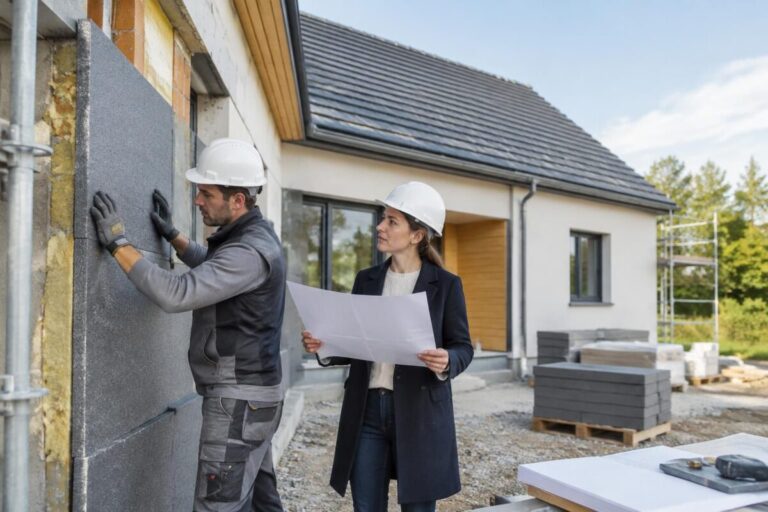
An intervention on the structure, the roof, the electrical panel or a gas network has significant consequences if something goes wrong. Building advice or professional help can clarify the constraints before you pick up a tool for the first time.
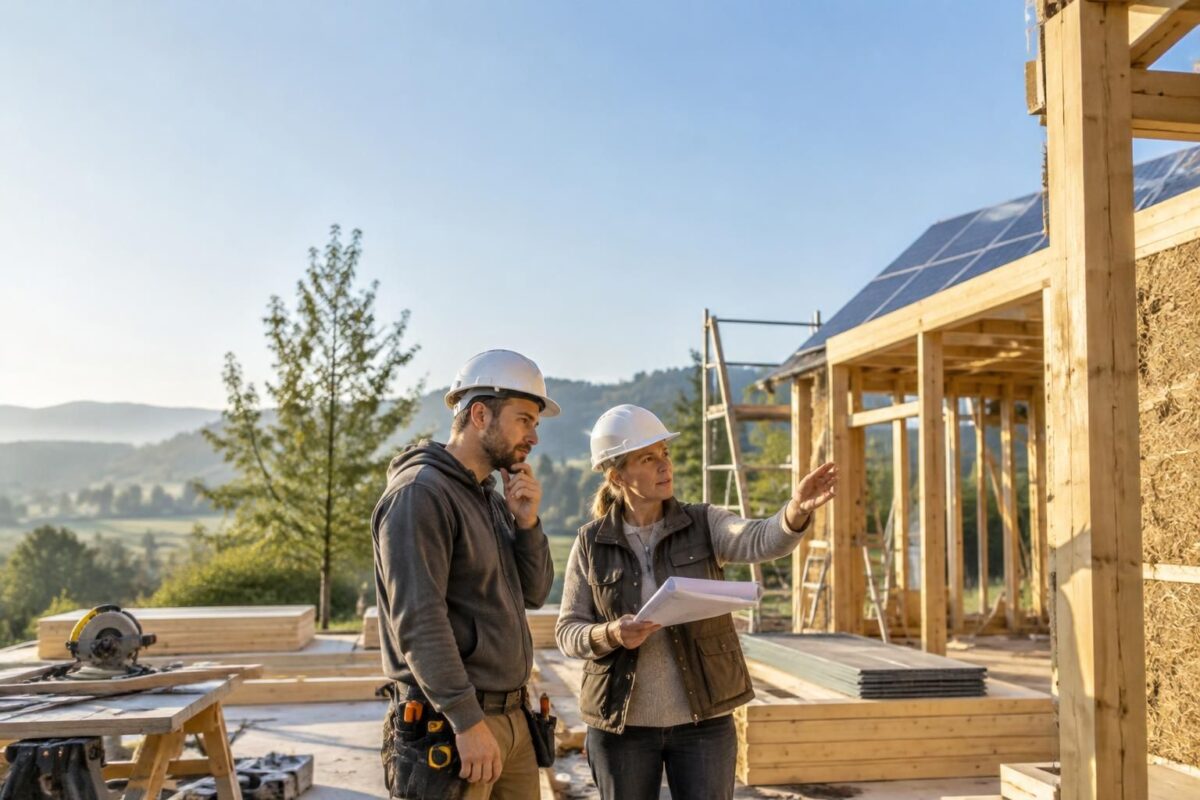
Professional support does not obligate you to delegate the entire project. A craftsman can supervise a specific point, while you keep control over planning, purchases and finishing.
| Type of work | You can consider doing | To delegate or have checked |
|---|---|---|
| Painting and finishes | Preparation, painting, small adjustments | Degraded substrate or presence of moisture |
| Insulation | Installation after training and verification of the system | Treatment of thermal bridges and water vapor |
| Structure and roofing | Small tasks with no particular risk | Load-bearing modification, carpentry, work at height |
| Electricity and gas | Identification and preparation not involving networks | Connections, safety and compliance |
A successful self-renovation rests on clear boundaries
The common pitfall is confusing autonomy with isolation. Wanting to learn everything as you go can lead to costly rework, especially if an error remains hidden behind a wall or under a coating.
Conversely, delegating every move reduces learning opportunities and may drive up the bill. The best strategy is to reserve specialized interventions for qualified people and to carry out yourself the tasks suited to your level.
- Compare several quotes and specify precisely what is included.
- Check the insurances and qualifications useful for the works concerned.
- Request a demonstration or practical training before taking over.
- Document the materials, the steps and the changes made to the building.
This method is particularly useful for improving the building’s autonomy: energy efficiency depends as much on good technical choices as on well-executed actions. A poorly installed insulation, for example, can create humidity problems instead of reducing heating needs.
Choose your mode of action in three steps
- Define the scope. Note the tasks, their order and the skills they require. For each task, indicate whether you can perform it, whether you need training, or whether it requires a professional.
- Have the sensitive points checked. Request a diagnostic or advice before structural work, networks and high-risk interventions. This step also helps adjust the renovation budget before purchases.
- Proceed in phases. Start with a limited task, check the result, then broaden your intervention if everything is compliant. Keep a margin of time and money for contingencies.
If you’re still unsure, choose a reversible and low-risk first step. An autonomous renovation builds over time: knowing when to ask for help is part of the project’s skills.
Frequently asked questions about renovation autonomy
Can you renovate a home entirely by yourself?
It’s possible for some tasks, but rarely desirable for all parts. Interventions on the structure, electricity, gas, or work at height require a serious evaluation and often the intervention of a professional.
What works are suitable for a beginner?
Painting, some simple arrangements and finishes can be suitable if you master safety guidelines and surface preparation. Start small and ask for advice if you discover a defect or an unknown material.
How to avoid the renovation budget from spiraling?
Estimate materials and services, compare several quotes, and plan a reserve of about 15 to 20% for contingencies. Have the technical items checked before launching purchases.
Does professional support prevent doing part of the work yourself?
No. You can delegate the technical steps to artisans and take care of preparation, organization or some finishes. Targeted support helps maintain project control while reducing risks.
Thanks for reading! I’d be happy to hear your thoughts in the comments. — Quentin