Sustainable materials: the materials that insulate without traps
Hi, Quentin here! The most reliable durable insulations are those that match your home, its climate and an appropriate installation: straw, wood fiber, cellulose insulation, hemp and cork are five options to consider.
Their appeal is not only related to their origin. A well-designed insulation improves thermal comfort, can reduce heating needs, and contributes to sustainable construction. But no material is without precautions: moisture, fire, treatments and installation quality matter as much as the ecological label.
Sustainable materials: 5 steps to choose without pitfalls
- Identify the areas to insulate : roof, walls, floors or attic spaces do not have the same constraints.
- Check the moisture in the walls and treat any infiltration before the work.
- Compare performances at equal thickness, taking into account thermal conductivity and the summer time lag.
- Request the composition and technical documents of the product, especially regarding treatments and reaction to fire.
- Favor a nearby resource when its performance, availability and cost suit the project.
The right natural insulation is therefore not chosen solely by the material name: it must be compatible with the wall and the local climate. To delve deeper into the question of walls that allow water vapor to circulate, consult this guide on breathable wall materials, then discover the points to check before insulating with straw.
Ecological insulation: natural does not always mean risk-free
Bio-based materials come notably from plant, animal or recycled resources. Their production may require fewer fossil resources than that of some conventional insulators, and several store carbon temporarily. The life cycle, however, depends on provenance, processing, transport and the product’s durability.
The word “natural” does not by itself guarantee a low impact or absolute safety. Mineral wools can irritate the skin or airways during handling, while synthetic products and their emissions must be evaluated according to their composition and use. Conversely, a bio-based insulation can also contain additives: always check its technical data sheet.
Another essential point: breathability is not a permission to let water in. A wall capable of managing water vapor must be designed in coherence with the layers that make it up, and protected against infiltrations. Humidity regulation improves comfort, but it does not replace proper ventilation or leak treatment.
Comparison of durable materials for insulating the home
The prices below are rough estimates based on available examples; they vary by region, thickness, format and installation. They do not allow direct comparison of products with different performance characteristics.
| Material | Common uses | Main advantage | Watch-out | Indicative price provided |
|---|---|---|---|---|
| Straw | Walls in suitable construction, often timber frame | Abundant resource and minimally transformed | Strict protection against rain during installation and design adapted to its thickness | Approximately 30 €/m² for a finished wall, excluding frame and finishes |
| Wood fiber, including wood wool | Walls, roofs and interior or exterior insulation | Versatility and interesting summer comfort depending on the system | Choose the density and format suited to the wall | Approximately 9 to 30 €/m² depending on the panel and thickness |
| Cellulose insulation | Attics, roof space, ceiling voids | Reuse of paper and good adaptation to irregular spaces | Loose-fill installation must be well executed to limit settling | Approximately 10 €/m² for loose-fill at 346 mm, excluding blowing; about 35 €/m² for 240 mm panels |
| Hemp | Walls, partitions, ceilings and attics | Plant-based resource and ability to contribute to humidity management | Check the product characteristics and the installation system | Approximately 20 €/m² in 140 mm |
| Cork | Floors, walls, ceilings and base areas | Good stability and versatile uses in renovation | Cost often higher; check origin and format | Approximately 30 €/m² in 60 mm boards |
Straw and wood fiber: choosing by the project
Straw is best suited for projects designed around its volume, such as a timber-frame house. It must stay dry during the work; a controlled density and proper installation help limit movement and settlement. For renovations where every centimeter counts, wood fiber panels often offer more formats and configurations.
Wood wool can also contribute to acoustical comfort, depending on its density and the overall assembly. It is not automatically the best choice everywhere: a roof, an old wall, and an interior partition are not treated the same way. The right material is the one that matches the actual wall, not just a price-per-square-meter comparison.
Cellulose insulation, hemp and cork: three distinct profiles
Cellulose insulation is often chosen for attics, where blowing allows filling hard-to-access spaces. An irregular installation or insufficient thickness can reduce the expected result; thus it is necessary to check the prescribed density and the continuity of the insulating layer.
Hemp, available in rolls or semi-rigid panels, integrates into different walls and can contribute to humidity regulation when paired with a coherent design. Cork, for its part, stands out for its stability and versatility, notably in certain applications on the floor or in the substructure. Its price and the origin of the material deserve careful verification.
The trap to avoid: insulating without treating moisture or installation
An old house sometimes has walls that vent moisture through their materials and plasters. Adding an insulating layer without examining this composition can shift condensation zones or retain water in the wall. Breathability must therefore be considered at the scale of the entire wall, with appropriate ventilation.
We also must beware of absolute promises. No insulation can be universally declared harmless in case of fire: the reaction to fire depends on the product, its treatments and its installation. Respect the technical prescriptions and request the documents needed from the artisan before confirming the choice.
Imagine Lina, who is renovating a stone house and wants to insulate her attic. She first compares prices, then discovers that access, ventilation and the condition of the roof change the available options. By having these points checked before purchase, she avoids choosing a high-performance insulation on paper but unsuitable for her building.
Choosing a durable insulation in three steps
- Establish the diagnosis. Identify heat losses, moisture traces, the condition of the supports and ventilation constraints. In renovations, a professional can check the building’s particularities before installation.
- Compare equivalent solutions. Weigh performance, thickness, declared emissions, origin, treatments and the total cost with installation. Also include summer comfort and acoustics if these criteria matter to you.
- Have the installation checked. Joints, cuts, protection against water and the continuity of the insulation are decisive. A good installation turns the material’s qualities into energy savings and real comfort.
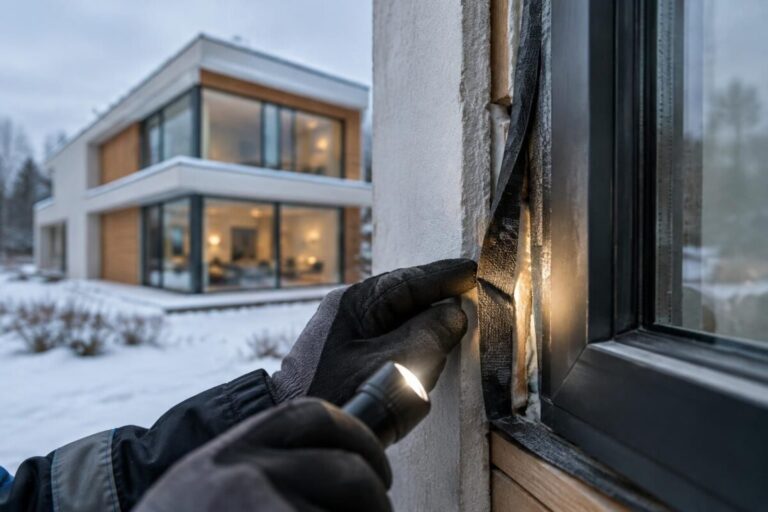
Before signing a quote, ask how the solution handles water vapor and any potential singular points, such as windows or duct passages. It is often in these details that the durability of the insulation is decided.
What does a well-thought-out bio-based insulation look like ?
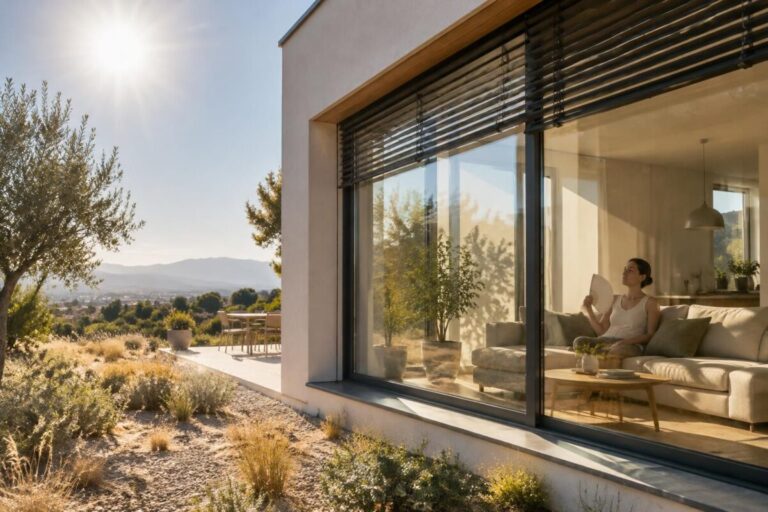
A successful approach combines an appropriate material, resources as local as possible and careful installation. It also takes into account the orientation of the house, the uses of the rooms and the heating system: insulating helps reduce needs, but does not justify heating more.
To visualize the installation principles and the different families of ecological insulation, this video search focuses precisely on the topic.
Which ecological insulation should be chosen for the attic?
Blown cellulose insulation is often practical for filling hard-to-access attic spaces. Wood fiber and hemp can also be suitable depending on the configuration; thickness, ventilation and the quality of installation should guide the choice.
Do bio-based insulating materials resist moisture?
Their behavior varies depending on the material and product. Some contribute to regulating humidity, but none replace fixing an infiltration or a design adapted to water vapor.
Is straw suitable for a renovation?
It can be, but its thickness and its installation method impose constraints. A building diagnosis and the advice of a professional help verify the compatibility of the project.
Is a natural insulation necessarily ecological?
No. It is also necessary to examine the origin of the raw materials, the manufacturing processes, the treatments, the transport, the durability and the recyclability.
Thanks for reading! Don’t hesitate to share your observations in the comments. — Quentin