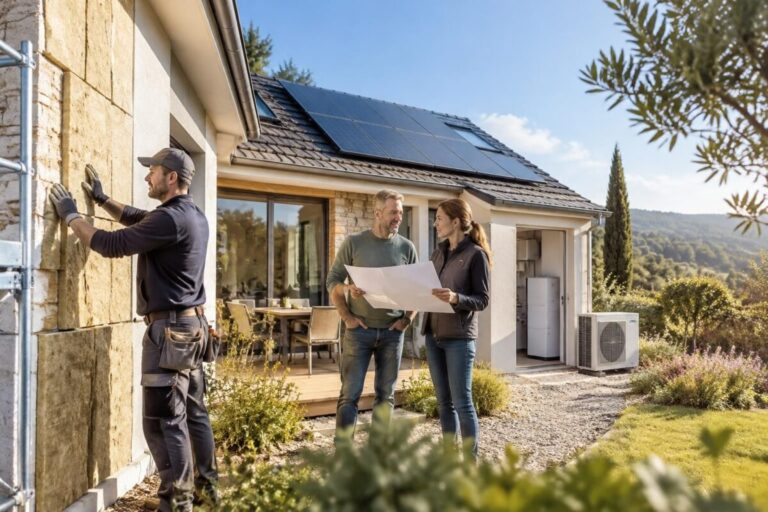
Green transition: this bad order quickly inflates the budget
Hello, this is Quentin.
To avoid the green transition from driving up the bill, start by reducing energy needs before choosing the equipment.
A poorly thought-out order can lead to funding work that becomes useless after a better-targeted renovation. The right method rests on a diagnosis, clear priorities and planned spending.
Things to do without delay
- Take stock : identify drafts, the cold rooms and energy-hungry equipment.
- Request an energy audit before signing major quotes.
- First address the envelope of the dwelling: roof, walls, windows and ventilation, according to the diagnosis.
- Compare several quotes by checking performance, warranties and maintenance costs.
- Keep a reserve for contingencies, often revealed once works begin.
To avoid an expensive start, also consult this guide on the false start that drives up the bill and these benchmarks on the right order of energy renovations. These two readings help to build a coherent energy planning rather than piling up purchases.
The trap of starting a green transition with equipment
Installing a heat pump or solar panels before reducing the dwelling’s losses may seem quick. Yet, if the house remains poorly insulated, the system risks being oversized and costing more to purchase as well as to use.
Imagine Léa, who first replaces her boiler in a house with poorly insulated attic spaces. After insulation work, heating needs decrease: the equipment chosen at the start is then too powerful for the new level of consumption. The problem doesn’t come from the technology, but from its wrong installation order.
Prioritize the works to better control costs
Cost control starts with reducing needs: appropriate insulation, airtightness and effective ventilation. Then you can size the heating and study renewables based on the remaining consumption.
This logic improves energy efficiency without multiplying expenses. It also helps steer the transition budget toward sustainable investments, rather than toward equipment that compensates for avoidable losses.
| Recommended order | Objective | Why it’s useful |
|---|---|---|
| Diagnostics and planning | Understand the real needs | Avoid choosing works blindly |
| Insulation and ventilation | Reduce losses and preserve indoor air | Reduces heating needs |
| Heating and energy production | Adapt equipment to the renovated dwelling | Limits the risk of oversizing |
| Monitoring consumption | Verify the results achieved | Allows adjusting usage and settings |
A successful ecological renovation does not consist in doing everything at once. It follows a climate strategy tailored to the dwelling, with expenditure optimization at each stage.
A three-step process to organize the renovations
1. Establish priorities from a diagnosis
Gather your invoices, note uncomfortable rooms and have a diagnostic conducted tailored to your dwelling. This gives you a basis to distinguish urgent works from improvements that can wait.
2. Budget a coherent path
Ask for quotes for the planned works and compare solutions with equivalent performance. Also check the incentives you may be eligible for, without deducting them from the budget until your eligibility is confirmed.
3. Carry out the works and then measure the results
After insulation, have the needs reassessed before selecting or adjusting the heating. Then monitor consumption for several months: the gap between the forecasts and the actual usage indicates whether adjustments are necessary.
What is the best order to energy-renovate a house?
Start with a diagnostic, then reduce losses with appropriate insulation and ventilation. Then size the heating and consider energy production according to the remaining needs.
Is it always best to insulate before replacing the heating?
Not necessarily in all cases, but it is generally preferable to assess and reduce needs before choosing a new equipment. A professional can determine the priority works based on the condition of the dwelling.
How to avoid overspending the transition budget?
Have a diagnostic performed, compare several detailed quotes and plan a contingency reserve. Also confirm the available aids before integrating them into the financing.
Why can a heating system be oversized after the works?
Improved insulation reduces heating needs. A unit chosen before these works may then provide more power than necessary, hence the benefit of recalculating the sizing after renovation.
Thanks for reading! I’d be happy to hear your thoughts in the comments. — Quentin