Your natural insulation attracts rodents
Hello, Quentin here. Natural insulation does not automatically attract rodents: they can mainly find shelter there if access points remain open. No insulation replaces building protection. If you’re looking for a rodent-proof insulation, start by identifying the passages, addressing an active presence, and protecting weak points before changing material.
The cavities in attics or walls can serve as shelter. The galleries, compacted or soiled areas locally undermine the continuity of the insulation; one should examine the extent of the damage rather than conclude that all is lost. Protection starts with the access points. To go deeper, discover natural ventilation in summer and how to build a high-performing natural insulation.
Why do rodents intrude on your natural insulation
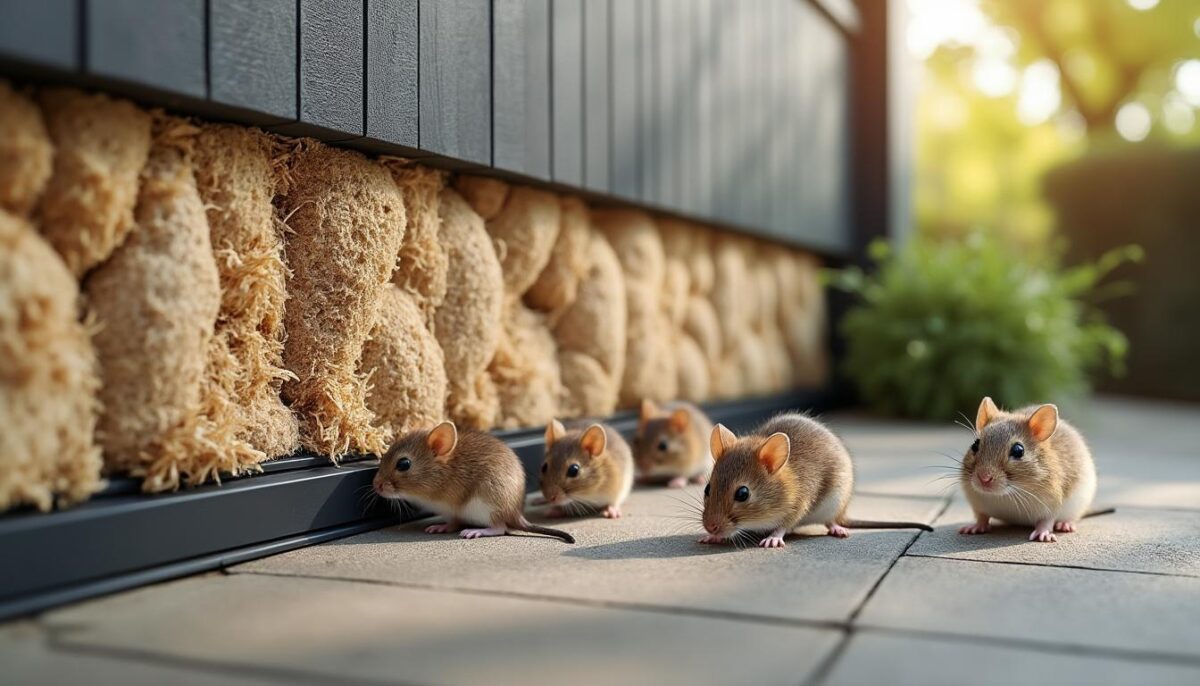
Nesting in insulation does not mean it becomes their food. The Construction Quality Agency explains that rodents can nest in bio-based insulations as in most fibrous or synthetic insulations. It emphasizes intrusion prevention: it’s stronger than a promise of a naturally repellent material.
- Rodents infiltrate through small openings in walls or roofs
- They burrow into insulations to make their nest
- Cellulose wool, hemp and wood wool do not exempt you from closing access
- Caulking and mesh screens strengthen your home’s protection
| Material | What to remember | Priority protection |
|---|---|---|
| Cellulose insulation | Does not guarantee absence of galleries or nests | Continuity of installation and protected access |
| Hemp / wood wool | Do not confuse low palatability with an anti-intrusion barrier | Singular points and careful closures |
| Glass wool / mineral wool | Can also be traversed or used as shelter | Inspection and repair of affected areas |
Effective techniques for pest-protected insulation
To keep your home healthy, go for a combined strategy:
- Diagnosis of entrances : identify duct passages, bottom of cladding, roof joints and cracks; have an active presence treated before sealing
- Appropriate mechanical protections : have the grills and closures chosen according to access, the identified species and the requirements of the construction system
- Preserved ventilation : do not block air inlets, exhausts or necessary air gaps
- Monitoring after intervention : check for new traces and the state of the protections
| Solution | Benefit | Attention |
|---|---|---|
| Repair of parasite passages | Close identified entry routes | Do not trap animals in a cavity |
| Suitable grills | Protect necessary openings | Maintain the required ventilation section |
| Specialized intervention | Identify species, activity and damage | Avoid improvised treatments |
Distinguish a pest hole from an opening intended for ventilation. You can try to reduce natural air currents, but without sealing off the building’s useful devices. To prepare the resumption of the attic, joints or coverings, renovation and insulation advice help to reinsert intrusion protection within the overall work. Also think about natural light when you design renovated spaces.
Choosing natural materials suited for a durable strengthening of the insulation
The right insulation is chosen according to the wall, the desired thermal resistance, humidity, fire and the installation rules. Check the product’s technical documentation; do not rely on the sole “anti-rodent” argument. Here are precautions for materials often sought:
- Cellulose insulation : respect the prescribed density and implementation; it does not render an open cavity animal-proof.
- Hemp : low palatability does not constitute a guarantee against nesting.
- Wood fiber : check product characteristics and protect entry points, without assuming that a treatment makes it invulnerable.
| Situation | Action before re-insulating | Choice of insulation |
|---|---|---|
| Old traces, dry insulation | Check for absence of activity and real condition | Keep what remains healthy and effective if suitable |
| Active presence | Have it identified and treated, then protect access | No change of material alone is enough |
| Soiled, damp or highly degraded areas | Evaluate removal, cleaning and necessary repairs | System compatible with the wall and its moisture management |
Practical example: nocturnal noises and a gallery near a duct first invite you to check this passage and the surrounding areas. Replacing only the insulation would leave the entry route open. Have the parts to be redone, potentially damaged cables and the treatment of soiled areas assessed before resealing.
How to detect a rodent infestation in my insulation?
Night noises, droppings, galleries or moved materials are clues to be confirmed. Do not touch droppings with bare hands and do not disperse them; have difficult-to-access or contaminated areas evaluated by a professional.
Can I install natural insulation if I have rodents?
First address the active presence and the entry routes, then assess the insulation’s condition. Replacing with cellulose or hemp without treating the access points does not solve the problem.
What natural repellents are effective against rodents?
Smells and essential oils do not constitute a reliable protection for the building and are not automatically risk-free. Favor diagnosis, appropriate mechanical protections and professional treatment if necessary.
My fiberglass insulation is damaged, what to do?
Assess the extent of galleries, soiling and moisture. Repair access points, check neighboring elements and replace parts that cannot be kept; total removal is not automatic.
How to strengthen rodent control in my home?
Identify activity and access points, treat the active presence, install appropriate protections while preserving ventilation, then monitor new traces. The choice of insulation completes this approach.
Thanks for reading this far. Best regards, Quentin