Passive House: why summer heat is such a concern
Hello, this is Quentin. A passive house can stay comfortable during the summer if its design blocks the sun before it enters and allows cooling of the rooms at night. Summer heat is a concern because effective insulation, without appropriate protections, can also slow the evacuation of the accumulated heat. With a few well-thought-out choices, overheating is however not inevitable.
What to do right away to limit summer heat
- Close the shutters or exterior sun shades before the sun hits the windows, especially on the west.
- Keep the windows closed during the hottest hours if the outdoor air is warmer than the indoor air.
- Open wide at night or early in the morning, when outside temperature drops, to create nocturnal ventilation.
- Limit indoor heat sources : prolonged cooking, tumble dryer and unused appliances.
- Identify the rooms that heat up the most and check the orientation of the glazing as well as the effectiveness of solar protections.
Summer comfort relies on several elements that work together: thermal insulation, shading, ventilation and thermal inertia. To better understand the summer behavior of a passive building, you can consult these references on how a passive house works in summer and this article on the balance between winter advantages and summer risks.
Why the passive house raises concerns during a heatwave
A passive house is designed to reduce heat exchange with the exterior. This high-performance envelope limits the inflow of hot air, but it is not enough to prevent the sun from warming a room through a window left without shade.
The trap is therefore to confuse insulation with automatic coolness. If solar gains and heat produced by occupants accumulate, a well-insulated house may take time to regain a comfortable temperature.
The sun, glazing and usage make the difference
Large windows bring in light, but they can also let in a lot of solar energy. External shading protections, such as shutters or adjustable sun shades, stop the rays before they pass through the glazing.
Conversely, an interior curtain acts mainly once the heat has entered. During a heatwave, closing the protections before direct sun exposure is therefore more effective than waiting for the room to become hot.
Can a passive house stay cool without air conditioning?
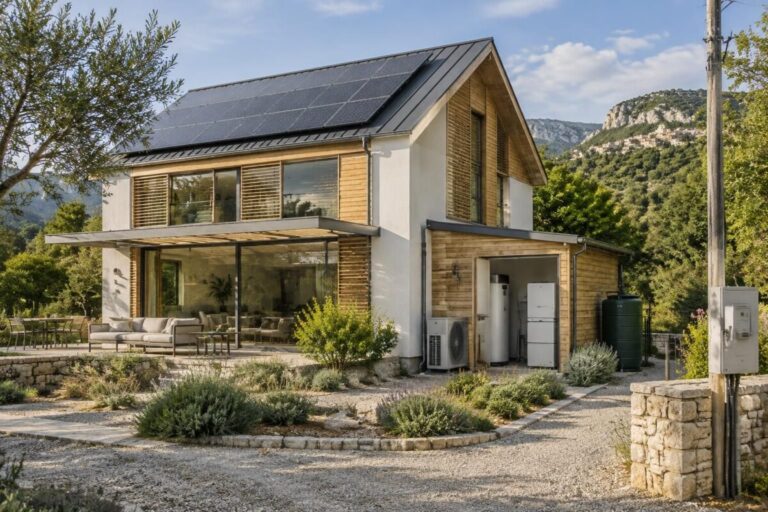
Yes, if the design takes into account the local climate and if the occupants adapt their actions to the weather conditions. An example reported in Espelette illustrates this principle: in a passive house, the indoor temperature was 24.7 °C while it was 39.5 °C outside, without air conditioning.
This performance relied in particular on triple glazing, external shading devices, thick walls in cellular concrete and continuous ventilation. This case shows the building’s potential but does not guarantee the same result in all regions or in every house.
| Element | What it provides | Points to watch |
|---|---|---|
| Thermal insulation | Slows heat exchange with the outside. | It does not replace shading of glazing. |
| External solar protections | Reduce direct solar gains. | They must be adapted to the orientation of the windows. |
| Night ventilation | Helps expel part of the accumulated heat. | It is useful when the outdoor air is cooler. |
| Thermal inertia | Helps slow down indoor temperature fluctuations. | It works best if the building is cooled at night. |
| Reduction of internal gains | Limits heat produced by appliances and activities. | Everyday actions count during hot episodes. |
In the face of climate change and the recurrence of high heat, thermal comfort deserves to be considered from the design stage, just as heating needs are. A thermal simulation can help identify sensitive orientations and size protections before construction.
Three steps to reduce the risk of overheating
- Observe the periods of sunshine. Note the windows that receive sun in the morning, afternoon, or evening. West-facing bays are often to be watched in the late afternoon.
- Block solar gains before they enter. Use shutters, exterior blinds or sun shading, then reduce activities that heat the interior during the hottest hours.
- Cool down when conditions are favorable. Open the windows at night or early in the morning if the air is cooler, ensuring safety and air quality.
A common mistake is leaving windows open all day thinking the breeze will be enough. When the outside is warmer, this habit can actually bring in heat; better to ventilate at the right time and protect the glazing the rest of the time.
What really worries about a passive house in summer
The fear mainly comes from an incomplete design: strong insulation, but little shade, poorly thought-out ventilation or too much internal gains. The passive house is not an automatic guarantee against heat; it is an approach that must integrate the summer climate from the start.
During construction as in renovation, seek concrete answers on orientation, solar protections, night ventilation and the risk of overheating. The right objective is a comfortable, energy-efficient home adapted to summers that are warming.
Can a passive house overheat?
Yes. A design without sufficient solar protections, or significant heat gains, can cause overheating despite good insulation.
When should you open the windows in summer?
Favor the night and early morning, when the outside air is cooler than the inside. During the hot hours, keep the windows closed if that helps maintain the coolness.
What protections are the most useful against the sun?
Shutters and exterior sun shading are particularly effective, as they limit rays before they pass through the glazing.
Does thermal inertia suffice to keep a house cool?
No. It can slow temperature variations, but must be paired with shading and with night ventilation when the outside air cools.
Thank you for reading! Feel free to share your observations in the comments. — Quentin