
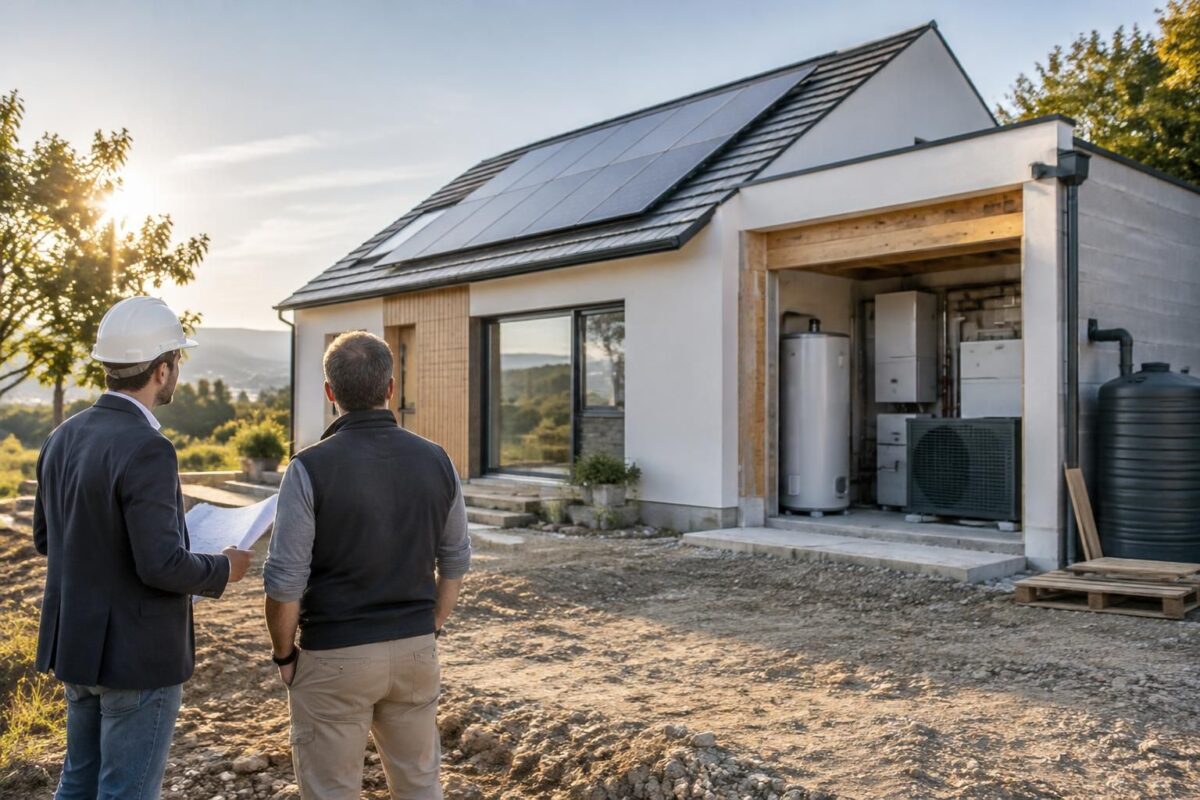
Building autonomy: this initial choice will stay with you for a long time
Hello, this is Quentin.
The option that will stay with you the longest is to first reduce the building’s needs, then size production and storage according to your actual consumption.
This logic avoids investing in ill-suited equipment and makes energy autonomy more accessible. It applies to both renovations and new construction.
The best practices to adopt
- Track your electricity consumption over a full year.
- Identify heat losses and improve insulation before adding production.
- Evaluate local resources, such as sunlight or wind.
- Size the solar panels according to your usage and the roof configuration.
- Compare the cost of a battery with the share of electricity you can consume when it is produced.
The right starting choice therefore depends on the building’s design, its climate and your lifestyle. To delve deeper, consult this guide on the initial choice of an autonomous building and these references on the influence of climate on energy autonomy.
The risk: producing before reducing needs
Installing a lot of panels without examining insulation or usage can lead to an expensive but poorly suited installation. Conversely, a sober home requires less energy to produce and store.
In an older house, losses through walls, attics or windows can weigh heavily on the bill. Strengthening the envelope and checking ventilation before choosing a heating system often helps better control the building’s performance.
Production and storage must follow usage
A photovoltaic installation of a few kilowatts-peak may suit some households, but the result varies depending on region, orientation, shading and habits. A battery shifts part of the solar electricity to the evening; it does not generate energy and is not automatically profitable in every project.
The priority is to match equipment with the needs. Scheduling the water heater or certain appliances during production hours can improve self-consumption without adding storage.
What budget to expect for realistic energy autonomy?
The amounts below are ballpark figures drawn from available data. The actual price depends in particular on power, installation, the building’s condition and necessary works; obtain several detailed quotes before deciding.
| Equipment or works | Estimated cost | Role in the project |
|---|---|---|
| Photovoltaic panels around 6 kWc | €12,000 to €17,000 | Produce part of the electricity consumed |
| Battery around 10 kWh | €7,000 to €10,000 | Store part of the surplus for later use |
| Heat pump | €5,000 to €12,000 | Provide heating and sometimes hot water, depending on the model |
| Enhanced insulation | Variable depending on works | Reduce the building’s energy needs |
These items do not automatically add up: the building may require different works, and the financial aid depends on the equipment and the criteria in force. Total energy independence generally requires more production and storage than partial autonomy, especially during periods of low sun.
Three steps to secure your starting choice
- Measure your needs. Gather invoices and note the important uses: heating, hot water, cooking and electrical appliances. An audit can also identify losses and renovation priorities.
- Reduce avoidable consumption. First address weaknesses of the envelope, improve regulation and favor efficient equipment. This step makes the building’s durability more aligned with actual needs.
- Have the equipment sized. Request a study taking into account the site, shading, seasonal production and your consumption schedule. Then compare scenarios with and without a battery.
Imagine a house that mostly consumes in the evening: shifting some uses to daytime can be enough to better utilize the panels, while a battery can meet other needs. The long-term view is to choose an evolutive solution rather than chasing a theoretical autonomy rate at the price of over-equipment.
Avoid promises of absolute autonomy
A grid-connected building can gain resilience and reduce its electricity purchases without being autonomous all year round. Results vary depending on weather, season, equipment and the ability to adapt certain uses.
Real-time monitoring helps identify unnecessary consumption and to operate devices at the right moment. It is this combination of energy restraint, renewable energy and proper management that supports better energy efficiency.
What is the first choice to make to render a building autonomous?
Start by establishing the energy needs and identifying the building’s losses. The sizing of production and storage comes next, based on these data.
Is it necessary to install a battery with solar panels?
Not necessarily. A battery can increase the use of the electricity produced, but its value depends on the consumption pattern, cost and local conditions.
Can we achieve 100% energy autonomy?
It is technically feasible in some configurations, but it requires a demanding design, more storage and careful management, especially in winter. Partial autonomy is often more realistic.
Why insulate before installing panels?
Reducing the needs allows better calibration of the installation and avoids financing production intended to compensate for losses that could have been addressed.
Thanks for reading! Feel free to share your observations in the comments. — Quentin


