Building autonomy: the right reflex before any purchase
Hello, this is Quentin.
First of all, check the real needs of the dwelling and its production capacity before seeking maximum energy autonomy.
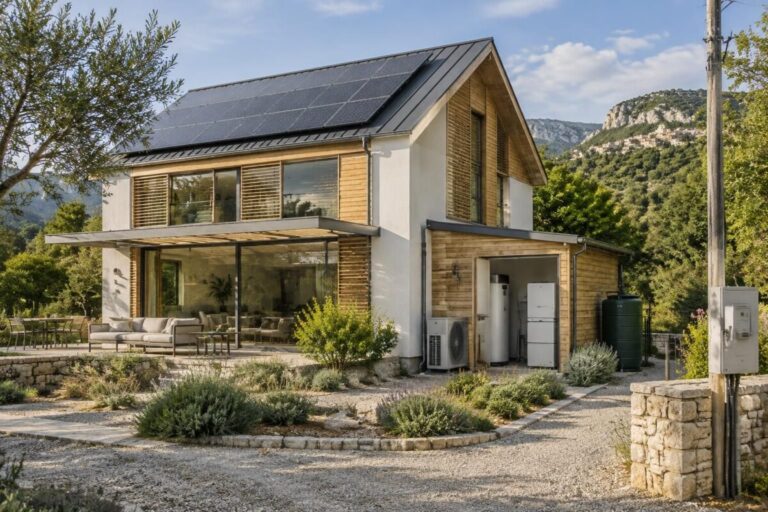
An autonomous building is not limited to solar panels or a battery. Its comfort, its thermal insulation and its operating costs matter just as much.
Some simple checks before signing can help avoid major work and help you choose a real estate purchase truly suited to your project.
Do it now
- Request energy bills for the last two or three years, if available.
- Review the property diagnostic, notably the EPC, and identify the information that warrants verification.
- Have the thermal insulation evaluated, the windows, ventilation and heating.
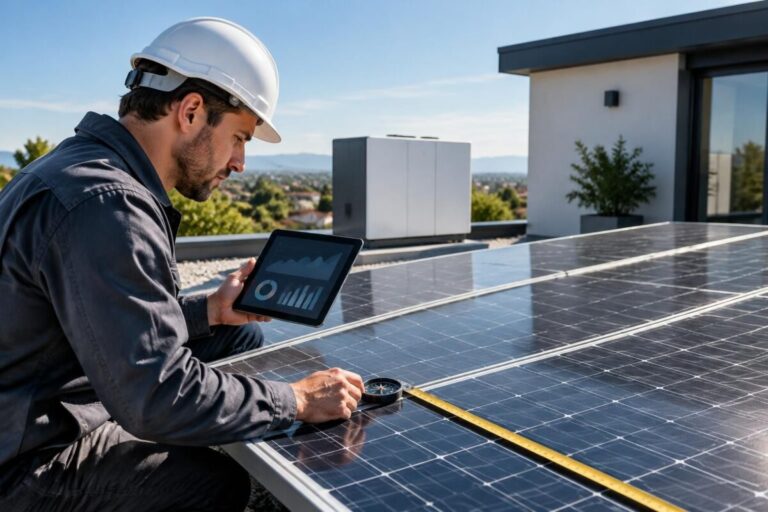
- Check the existing solar production: capacity, condition of equipment, maintenance and connection conditions.
- Estimate the works and operating costs before estimating the achievable level of autonomy.
To better frame your project, start with this simple calculation of the building’s autonomy, then see how to avoid fragile autonomy in a passive house. These benchmarks help connect the dwelling’s needs to the equipment under consideration.
Energy autonomy: compare the dwelling to its needs
The classic trap is to evaluate a house based only on its solar panels. However, a system can produce a lot in summer while meeting little of the evening or winter needs.
Start by examining actual energy consumption, then compare it to the planned production according to the seasons. A well-insulated house equipped with efficient appliances may require less energy than a dwelling with a more powerful system but poorly designed.
What the checks help distinguish
| Element to examine | What it reveals | Question to ask |
|---|---|---|
| Bills and readings | The uses and their variations over the year | Do the consumptions match the dwelling’s occupancy? |
| Insulation and ventilation | Heat losses and indoor air quality | Which works are priorities to reduce the needs? |
| Solar equipment | Production, condition and the modalities of electricity use | Is the production monitored and adapted to the uses? |
| Heating and hot water | A significant portion of the household’s energy needs | Is the system functioning properly and at what cost? |
An energy audit can complement the available diagnostics and propose a priority order for the works. It does not replace the verification of the equipment nor the study of your habits, but it provides a more concrete view of possible improvements.
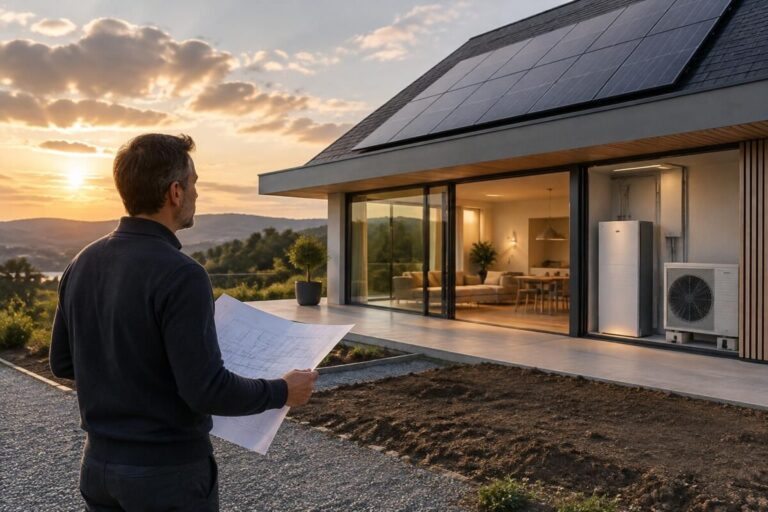
Home purchase: identify the right autonomy potential
Imagine Lina, who visits a house with recent solar panels. The bills seem low, but they pertain to a period when the dwelling was sparsely occupied. By requesting production readings and having the insulation checked, she discovers that electric heating may significantly raise expenses once the house is inhabited year-round.
This case reminds us that a recent installation does not by itself guarantee good autonomy. You must understand how the building works and verify whether the seller’s information reflects usage comparable to yours.
Three steps before making your decision
- Gather the data. Request diagnostics, energy bills, consumption and production readings, as well as the available documents on the installations. Also note any missing information.
- Have the sensitive points checked. Depending on the dwelling, hire a professional to examine the insulation, heating, ventilation or the solar system. Have the priority works priced rather than relying on a general estimate.
- Compare the overall cost. Put side by side the purchase price, the works, maintenance and probable energy expenses. Then choose a level of autonomy that aligns with your budget and your uses.
The ecological transition of a dwelling is often built step by step: reducing losses, improving equipment, then adjusting production and storage. The best purchase is not necessarily the house that promises the most, but the one whose operation can be verified and improved.
Useful questions before buying an autonomous building
Is the EPC enough to evaluate the autonomy of a dwelling?
No. It provides useful indications about energy performance, but does not describe alone the actual uses, the detailed operation of the equipment or seasonal autonomy. Complete it with the invoices, production readings and, if necessary, an energy audit.
What documents should you ask the seller for?
Ask for the diagnostics available, the energy bills, the solar production readings and the maintenance information for the equipment. Contracts or documents related to the installation can also help to understand its operation.
Is a house with solar panels autonomous?
Not necessarily. It all depends on consumption, installed capacity, seasons and the possibility to use or store the produced electricity. Check the real data before concluding.
What control should be prioritized before purchase?
Start with the dwelling’s needs: insulation, heating, ventilation and consumption. Then have the production systems checked and quantify the necessary improvements according to your project.
I hope these tips have been helpful. See you soon! — Quentin