
Green energy: this bad choice costs a lot quickly
Hello, it’s Quentin.
To avoid a costly misstep in green energy, first reduce the home’s energy needs, then invest in suitable equipment.
The energy transition is not about buying as much equipment as possible. A well-ordered energy choice protects your energy bill and improves the profitability of each investment.
The trap is simple: producing more without correcting losses can raise the cost of energy instead of reducing it.
The right reflexes to avoid a costly energy investment
- Identify heat losses before choosing equipment: roof, walls, windows and ventilation.
- Reduce unnecessary consumption with properly adjusted heating and efficient equipment.
- Compare the options between purchasing renewable electricity and on-site generation.
- Request several detailed quotes, with installation cost, maintenance and estimated savings.
- Check subsidies and contract conditions before signing, without basing the project on expected aid.
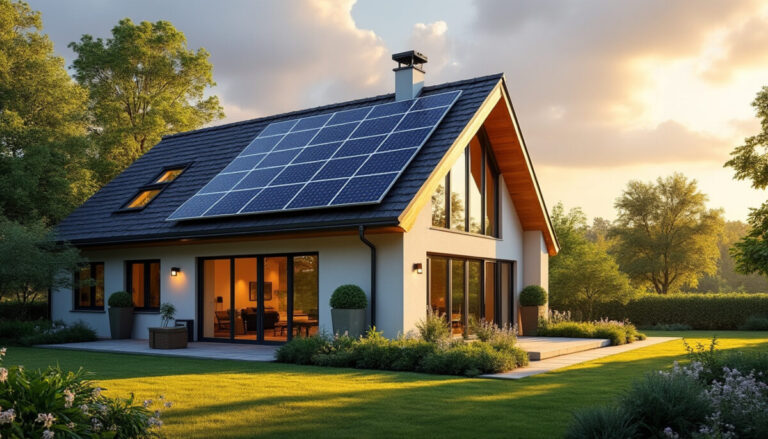
The wrong order often is to install solar panels before addressing a poorly insulated roof: part of the investment then does not address the dwelling’s first problem. To examine the benefit of insulating before investing and comparing possible savings by producing more or consuming less, start by looking at your actual usage.
The trap: confusing green production with guaranteed savings
A renewable installation can reduce electricity purchases, but it does not by itself guarantee a rapid decrease in expenses. The outcome depends notably on the purchase price, local production, the share consumed on site, and maintenance costs.
Public support for renewable energies and old feed-in contracts weigh on collective finances, but these costs do not automatically translate into identical bills for every household. It is necessary to distinguish national energy policy from the profitability calculation of a domestic project.
Imagine Nora, who plans to install panels while her electric heating operates in a poorly insulated home. If she first reduces losses, she can then size her installation according to a lower need and avoid paying for an unnecessary capacity.
Compare the options before spending
A green electricity contract can be simpler than home equipment, while solar panels require an initial investment and a site study. In both cases, read the exact conditions: a so-called green offer does not necessarily mean that the electricity produced reaches your outlet.
The table helps to ask the right questions. The results vary depending on the dwelling, the contract, and the usage; no amount of savings can be guaranteed without concrete data.
| Option | Cost to examine | To check before choosing |
|---|---|---|
| Green electricity offer | Price per kWh, subscription and tariff evolution | Origin of the electricity and guarantees of origin |
| Solar panels | Equipment, installation, connections and maintenance | Sunlight, roof condition and self-consumed share |
| Insulation and settings | Works, ventilation and regulation equipment | Priority of works and expected energy savings |
The cost of energy is therefore controlled by comparing the full cost of the project, rather than relying on a commercial promise or a single production figure.
Three-step procedure to choose the right order
- Établis un état des lieux. Record your consumption, heating periods, and main losses. A reliable diagnosis helps distinguish urgent works from merely attractive equipment.
- Rank the solutions by their effect. Address first heat losses and controls, then study the renewable energies suitable for the dwelling. Request comparable quotes with clearly indicated assumptions.
- Check financing and commitments. Confirm eligibility for subsidies with the competent bodies, review guarantees and calculate total cost before signing.
This method makes energy investment easier to understand and limits corrective spending. A modular installation can also allow progress in steps, without over-sizing the project from the outset.
Un projet vert doit aussi tenir dans le budget
Green energies contribute to the energy transition, but their value depends on the context: household needs, the quality of the envelope, equipment prices, and the duration of use. The economic impact is assessed over the whole project, not just the chosen technology.
A well-prepared decision avoids paying twice: first to produce or equip, then to correct overlooked losses. The right reflex remains to reduce the need before sizing the solution.
Should you insulate before installing solar panels?
Often, it is relevant to first address the main losses and reduce consumption. The right order, however, depends on the condition of the dwelling and the necessary work.
Does a green electricity offer cost more always?
No. The price depends on the supplier, the subscription, the price per kWh and the contract terms. Compare offers on identical criteria.
How to verify the profitability of solar panels?
Take into account the full price of the installation, the estimated production, the self-consumed share, maintenance and any potential resale conditions. Request detailed hypotheses stated in the quote.
Do public subsidies guarantee a cheaper project?
They can reduce the remaining cost if the project is eligible, but the rules and amounts vary. Check conditions with the competent organizations before signing.
Thank you for reading! Feel free to share your observations in the comments. — Quentin